
Peanut butter often sits beside bread, crackers, and baking ingredients, making cross-contamination easy to overlook. For anyone managing Celiac disease or gluten sensitivity, asking is peanut butter gluten free involves looking far beyond the simple peanut itself.
Knowing where these risks appear makes it easier to evaluate packaged peanut butter and handle it safely at home.
1. Is Peanut Butter Gluten Free?
Plain peanut butter is generally gluten-free because peanuts do not naturally contain gluten. Simple products usually contain peanuts, salt, oil, sugar, or a combination of these ingredients.
However, flavored varieties, added mix-ins, shared manufacturing equipment, and cross-contact after opening may affect whether a particular jar is suitable.
People with celiac disease should therefore check the exact label rather than assuming that every product from the same brand has the same gluten status.
2. Which Types of Peanut Butter May Be Gluten-Free?
Products with short ingredient lists are usually easier to evaluate. The following types may be suitable when their labels and manufacturing information have been verified:
- Natural peanut butter: Commonly made with peanuts and salt, although separation of the natural oils may occur.
- Smooth peanut butter: May be gluten-free when its sweeteners, oils, and stabilizers contain no gluten.
- Crunchy peanut butter: Usually follows a similar formula to smooth peanut butter but includes pieces of roasted peanuts.
- No-added-sugar peanut butter: Can be suitable when no gluten-containing flavors or additions are used.
- Powdered peanut butter: May be gluten-free, but sweeteners, flavors, and processing information still require checking.
- Flavored peanut butter: Chocolate, honey, cinnamon, or other varieties may be suitable when clearly labeled gluten-free.
- Fresh-ground peanut butter: The peanuts may contain no gluten, but shared grinders or bulk-food equipment can create cross-contact.
3. What Could Add Gluten to Peanut Butter?
For a specific jar, review any ingredients added beyond peanuts, salt, oil, and basic sweeteners. Gluten is more likely to appear in specialty flavors and mix-ins than in plain peanut butter. Potential sources include:
- Cookie or biscuit pieces
- Pretzels and cracker crumbs
- Brownie or cake mix-ins
- Malt, malt extract, and malt flavoring
- Barley-based ingredients
- Wheat flour or wheat starch
- Granola that is not labeled gluten-free
- Oats without a gluten-free claim
- Candy pieces containing wafers or cookies
- Flavoring blends with unclear sources
- Added protein blends containing wheat
- Shared equipment used for gluten-containing nut butter products
- Bulk grinders previously used for flavored spreads
>>> Read more: Is Quinoa Gluten Free? 5 Essential Facts for Safe Eating
4. How to Choose Peanut Butter for a Gluten-Free Diet?
A short ingredient list makes peanut butter easier to evaluate, but it does not provide the same assurance as a clear gluten-free claim.
Check the exact jar rather than relying only on the product name or brand. Use this checklist:
- Look for gluten-free on the packaging.
- Read the complete ingredient list for wheat, barley, rye, and malt.
- Review the allergen statement for wheat.
- Check cookie, pretzel, brownie, cereal, and candy mix-ins.
- Confirm that oats or granola are labeled gluten-free.
- Check powdered peanut butter and protein-enhanced products separately.
- Review warnings about shared equipment or facilities.
- Avoid bulk or fresh-ground peanut butter when the grinder’s previous use is unclear.
- Recheck flavored varieties even when the brand’s plain peanut butter is suitable.
- Review the label again when the packaging or recipe changes.
- Contact the manufacturer if the gluten status remains unclear.
A systematic review and meta-analysis estimated that 15.12% of analyzed gluten-free foods contained more than 20 mg/kg of gluten.
Contamination was lower among labeled gluten-free products than naturally gluten-free foods, supporting the value of checking for a clear label rather than relying only on the base ingredient.
5. How to Prevent Peanut Butter Cross-Contact at Home?
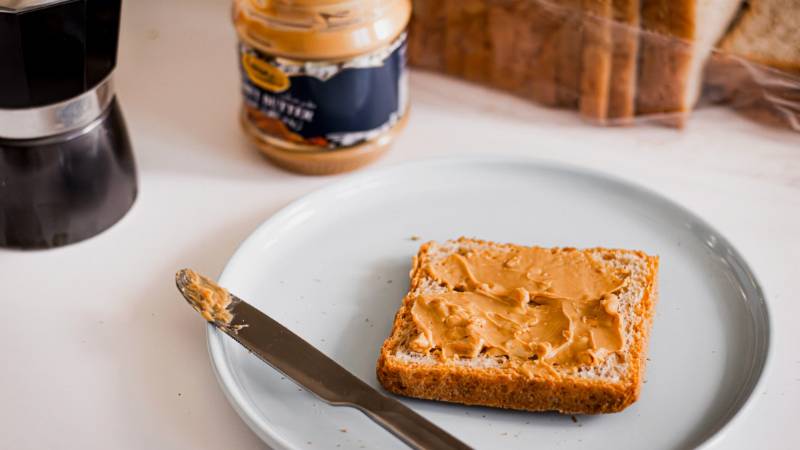
Even after confirming is peanut butter gluten free, the product can pick up crumbs after the jar is opened.
This commonly happens when the same knife moves between regular bread and peanut butter. Use these practical precautions:
- Keep a separate jar for the person following a gluten-free diet.
- Label the jar clearly on the lid and front.
- Store it away from regular bread, crackers, and baking flour.
- Use a clean knife or spoon every time.
- Do not return a utensil to the jar after it has touched bread.
- Spoon peanut butter onto a clean plate before spreading it.
- Use a squeeze container when an appropriate gluten-free product is available.
- Clean counters before preparing gluten-free food.
- Wash utensils with soap and water before reuse.
- Avoid placing the lid on a surface covered with crumbs.
- Replace the jar if visible crumbs enter it.
- Ask family members and guests not to share utensils between jars.
>>> Read More: Is Sourdough Bread Gluten Free? Surprising Facts You Must Know
6. FAQs
Clear up common confusion around is peanut butter gluten free with these quick, expert-backed answers to frequently asked dietary questions.
Is natural peanut butter gluten-free?
Natural peanut butter made only with peanuts and salt is generally gluten-free. Check for a gluten-free claim and shared-equipment information when cross-contact is a medical concern.
Is crunchy peanut butter gluten-free?
Crunchy peanut butter may be gluten-free because the pieces are usually chopped peanuts. Added flavors, mix-ins, and manufacturing practices still require checking.
Is powdered peanut butter gluten-free?
Some powdered peanut butter is gluten-free, while other formulas contain flavors, sweeteners, or protein blends that need review. Check the exact package rather than assuming all powdered products are suitable.
Does flavored peanut butter contain gluten?
It can. Flavors containing cookies, pretzels, brownies, malt, cereal, or certain candy pieces may introduce gluten. Choose a product with a clear gluten-free claim.
7. Conclusion
Plain peanut butter is usually one of the simpler spreads to evaluate, but specialty flavors and shared kitchen habits can create additional risks. The ingredient list, gluten-free claim, manufacturing information, and condition of the opened jar all matter.
The safest answer to “is peanut butter gluten free?” comes from checking the exact product and keeping it away from bread crumbs. A clearly labeled jar, clean utensils, and separate household storage can help protect the peanut butter after opening.