
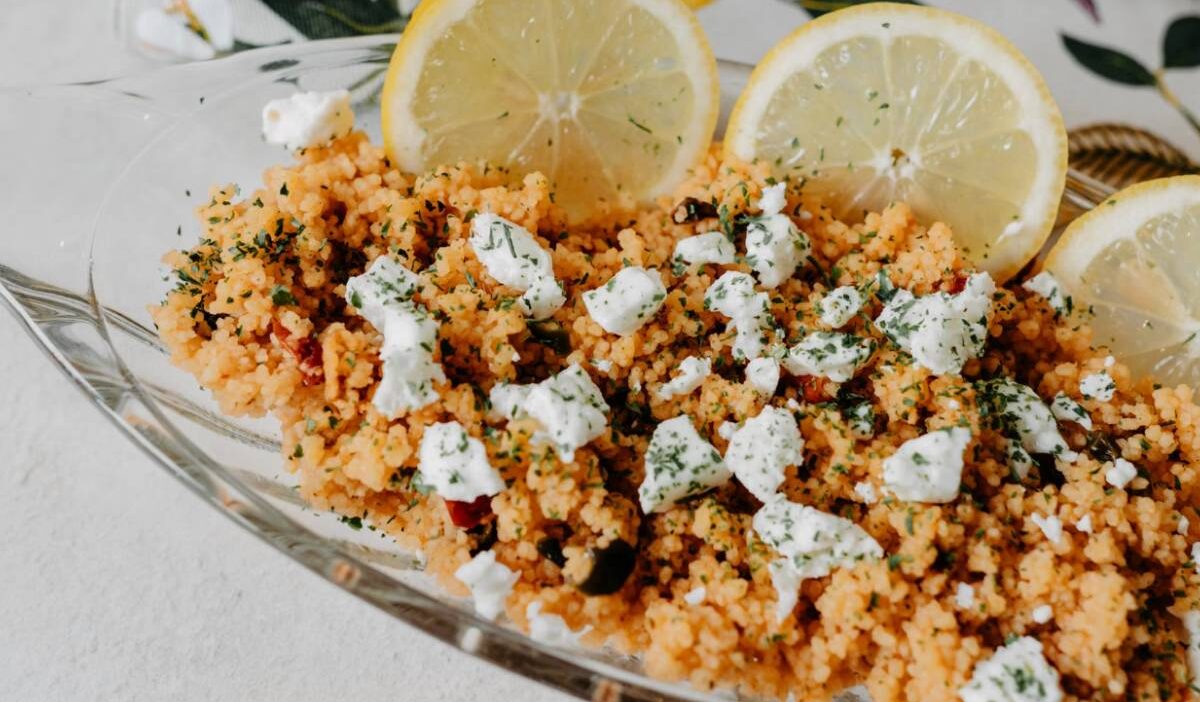
Couscous often sits beside rice and quinoa, so it is easy to assume that all three fit the same diet. Their similar appearance, however, says very little about the ingredients used to make them.
For anyone asking is couscous gluten free, this guide examines traditional products, labeled alternatives, and the package details that deserve attention. It also compares several substitutes by texture and use, making it easier to choose the right base for salads, bowls, sides, and warm meals.
1. Is Couscous Gluten Free? Quick Answer
No. Traditional couscous is not gluten-free because it is usually made from semolina, a coarse flour made from durum wheat. Since wheat contains gluten, regular Moroccan couscous, Israeli couscous, and pearl couscous are not suitable for people following a strict gluten-free diet.
Although couscous looks similar to rice or other gluten-free grains, it is a wheat-based product. The Celiac Disease Foundation lists couscous among common gluten-containing foods.
People with celiac disease or gluten sensitivity should choose products specifically labeled gluten-free, such as couscous alternatives made from ingredients like corn, quinoa, or rice.
2. Why Does Couscous Contain Gluten?
Understanding is couscous gluten free starts with knowing what couscous is made from. Couscous may look like a tiny grain, but it is actually closer to pasta.
Producers traditionally moisten semolina, roll it into small granules, and dry it. Since semolina comes from durum wheat, the finished product contains gluten.
Different sizes and names do not change the basic ingredient:
- Moroccan couscous: Very small granules that cook quickly
- Israeli or pearl couscous: Larger round pieces with a chewy texture
- Lebanese couscous: Larger pearls that usually require more cooking time
- Whole-wheat couscous: Made with additional parts of the wheat kernel but still contains gluten
Flavored couscous mixes may contain other gluten sources in seasoning packets, sauces, or added pasta ingredients. Removing the flavor packet does not make the couscous itself safe because the base product is still made from wheat.
3. Are There Gluten-Free Couscous Options?
When asking is couscous gluten free, check whether the package contains traditional semolina or a substitute ingredient. Some manufacturers produce couscous-shaped products from:
- Corn
- Rice
- Cassava
- Millet
- Chickpeas
- Lentils
- Quinoa
- A blend of gluten-free flours
These products can provide a similar size or cooking style, but they may differ in flavor and texture. The words “corn couscous” or “rice couscous” alone are not enough for someone with celiac disease. Look for a clear gluten-free claim and check the allergen statement for wheat.
Under FDA labeling rules, food carrying a gluten-free claim must contain less than 20 parts per million of gluten. Products without that claim may have been processed on shared equipment or packed in a facility that also handles wheat.
>>> Read more: Is Buckwheat Gluten Free? The Answer May Surprise You
4. Best Gluten-Free Alternatives to Couscous
The best substitute depends on whether you need a neutral side, a chewy salad base, or a lighter vegetable option. These six choices cover most couscous recipes:
- Quinoa
Its small grains and slightly firm texture work well in tabbouleh, grain bowls, and stuffed vegetables. Rinse it before cooking to reduce its naturally bitter coating.
- Rice
Long-grain rice provides a soft, neutral base for stews and roasted vegetables. Short-grain varieties are stickier and work better in dishes where the grains should hold together.
- Millet
Cooked millet has a mild flavor and can remain fluffy when the liquid is measured carefully. It suits warm side dishes, salads, and pilaf-style recipes.
- Buckwheat
Buckwheat groats have a nutty taste and firmer bite. They pair well with mushrooms, roasted vegetables, herbs, and savory sauces.
- Corn-based couscous alternatives
These products often resemble traditional couscous more closely in size and appearance. Their mild corn flavor works in salads, sides, and dishes served with broth.
- Cauliflower rice
Finely chopped cauliflower creates a light, lower-carbohydrate substitute. Use it in cold salads or briefly sauté it for warm dishes, but expect a softer texture than pasta-based couscous.
Quinoa is often the closest all-purpose replacement for salads, while a labeled corn- or rice-based couscous alternative may be preferable when the shape and presentation matter most.
5. Couscous vs. Gluten-Free Alternatives
When deciding is couscous gluten free, appearance is not a reliable guide. Several substitutes resemble couscous after cooking, but their plant source, texture, and best uses differ.
| Option | Naturally Gluten Free? | Texture | Best Uses |
| Traditional couscous | No | Small, tender, and slightly chewy | Conventional salads, tagines, and side dishes |
| Quinoa | Yes | Light with a gentle bite | Tabbouleh, bowls, salads, and stuffed vegetables |
| Rice | Yes | Soft or fluffy, depending on the variety | Stews, pilafs, curries, and everyday sides |
| Millet | Yes | Mild and fluffy when cooked carefully | Warm salads, pilafs, and grain bowls |
| Buckwheat groats | Yes | Firm with a nutty taste | Savory bowls, soups, and roasted vegetable dishes |
| Corn-based couscous alternative | Usually, when made only with gluten-free ingredients | Small and mildly chewy | Recipes where a couscous-like shape matters |
| Cauliflower rice | Yes | Soft and slightly crisp when lightly cooked | Cold salads, quick sides, and lower-carbohydrate meals |
“Naturally gluten-free” describes the base ingredient. Packaged products can still contain wheat additives or encounter gluten during production, so the label remains important.
6. How to Check Couscous Products for Gluten
Packaging terms such as “ancient grain,” “plant-based,” or “whole grain” do not indicate gluten status. Work through this checklist before purchasing:
- Read the full ingredient list. Do not judge the product from its front label or appearance.
- Look for wheat, durum, or semolina. Any of these ingredients means the product contains gluten.
- Check the allergen statement. In the United States, packaged food containing wheat must identify it as a major allergen.
- Find a clear gluten-free label. This is especially important when avoiding gluten for medical reasons.
- Identify the replacement ingredient. Confirm whether the couscous-style product is made from corn, rice, cassava, quinoa, or another gluten-free food.
- Review seasoning packets separately. Broth powders and flavor mixes may introduce wheat even when the grain substitute is safe.
- Consider cross-contact warnings. Shared mills, production lines, storage bins, and kitchen utensils can introduce gluten.
- Ask how restaurant dishes are prepared. A server may use the word couscous for either traditional wheat couscous or a gluten-free substitute.
When a label remains unclear, contact the manufacturer or choose another product with more complete information.
7. FAQs
What is surprisingly not gluten-free?
People often ask is couscous gluten free because it resembles rice, but traditional couscous is made from wheat. Other unexpected gluten sources may include regular soy sauce, malt vinegar, licorice, imitation crab, seasoned chips, soup bases, and some sauces.
Can people with celiac disease eat couscous?
They should not eat traditional wheat-based couscous. A product made with gluten-free ingredients may be suitable if it carries a clear gluten-free label and has been protected from cross-contact.
What causes celiac disease later in life?
Celiac disease later in life occurs when a person with a genetic risk develops an immune reaction to gluten. It can appear or be diagnosed at any age. Triggers are not fully understood, but illness, stress, or pregnancy are not proven single causes.
8. Conclusion
So, is couscous gluten free? Traditional couscous is not, but labeled alternatives made from corn, rice, quinoa, or other approved ingredients can fill the same role. Check both the base ingredients and cross-contact information before adding a product to a medically required gluten-free diet.