
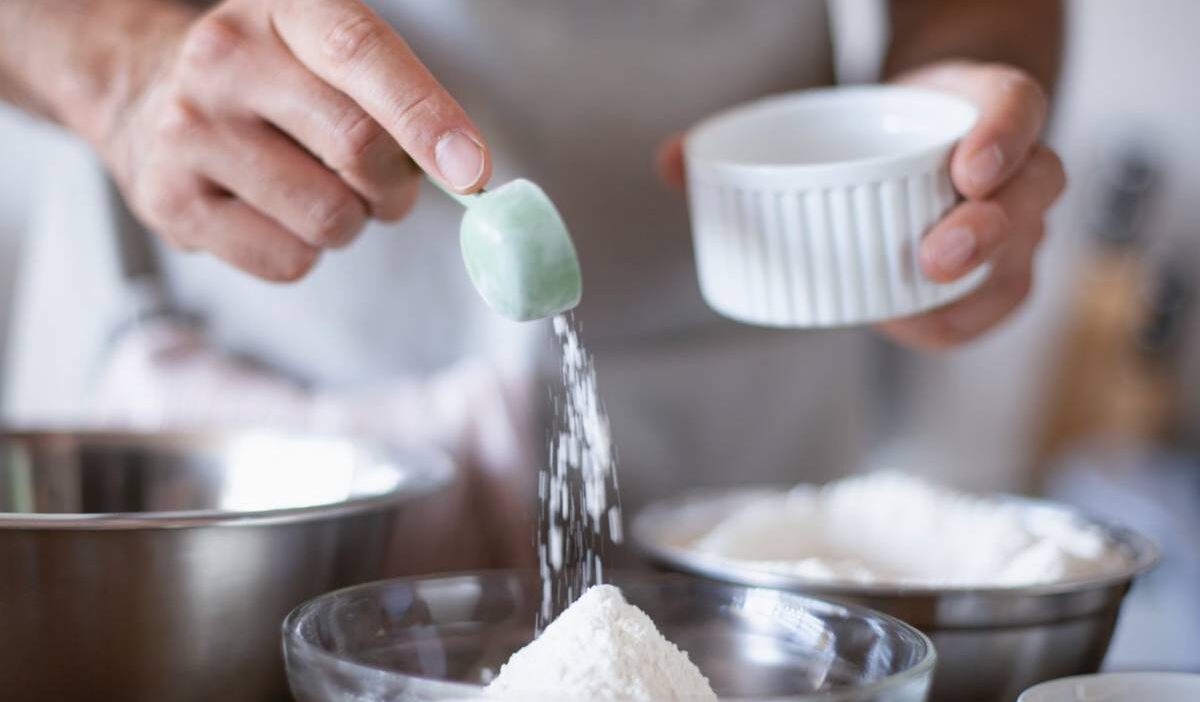
The question is baking powder gluten free matters because this small baking ingredient appears in cakes, biscuits, pancakes, and many flour blends. Its simple appearance does not reveal which starch or production process was used.
This guide explains how to assess baking powder, compare it with baking soda, and select a suitable option for gluten-free baking.
1. Is Baking Powder Gluten Free?
Yes, most baking powder sold in the United States is gluten-free. It typically contains baking soda, powdered acids, and a starch that prevents moisture from triggering an early reaction. However, ingredients vary by brand.
Common baking powder ingredients include:
- Baking soda: Naturally gluten-free.
- Powdered acids: Typically gluten-free leavening ingredients.
- Starch: Usually cornstarch, but some products may contain wheat-derived starch.
Although cornstarch, potato starch, and tapioca starch are naturally gluten-free, cross-contact during manufacturing is possible.
For people with celiac disease, choosing baking powder labeled gluten-free is a practical precaution. Always review the ingredient list before use.
2. What Is Baking Powder Made Of?
Baking powder is a chemical leavening agent. Once it meets moisture and heat, its alkaline and acidic components react and release carbon dioxide, which helps batter or dough rise.
Baking Soda
Baking soda is sodium bicarbonate, a naturally gluten-free compound. It provides the alkaline side of the reaction but needs an acid to create the gas responsible for rising.
Baking soda is also sold separately. A recipe using baking soda alone normally includes an acidic ingredient such as lemon juice, buttermilk, yogurt, or vinegar.
Acidic Ingredients
Commercial baking powders contain one or more dry acids. Common examples include:
- Cream of tartar
- Monocalcium phosphate
- Sodium acid pyrophosphate
- Sodium aluminum phosphate
- Sodium aluminum sulfate
These substances do not normally introduce gluten. The combination of acids also determines whether the baking powder is single-acting or double-acting.
Starch and Anti-Caking Agents
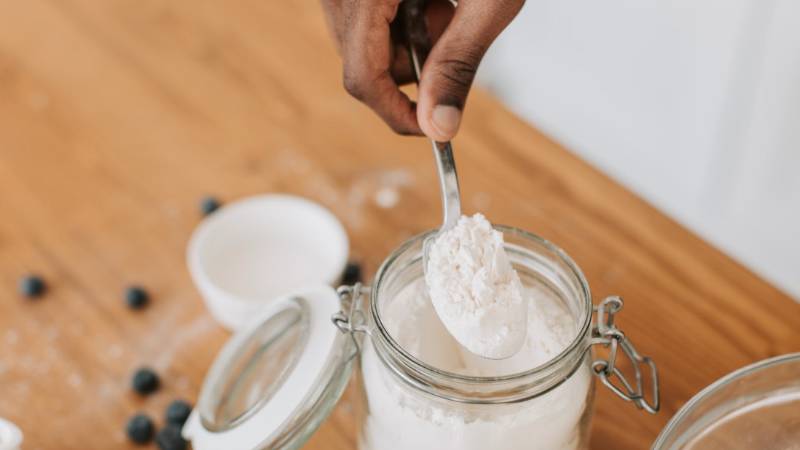
Starch absorbs moisture and prevents the acid and baking soda from reacting inside the container. Cornstarch is common in the United States, while potato or tapioca starch may appear in specialty formulas.
The starch is the ingredient most likely to raise a question. If the label lists only “starch” without identifying its source, contact the manufacturer before using it for someone who must strictly avoid gluten.
>>> Read more: Is Cornstarch Gluten Free? 7 Important Facts Before You Use It
3. Is Baking Powder Safe for People With Celiac Disease?
Yes, baking powder can be safe for people with celiac disease if it contains gluten-free ingredients and is protected from gluten cross-contact. However, not every product is guaranteed to be gluten-free.
To determine is baking powder gluten free for a specific brand, follow these precautions:
- Check the label: Choose baking powder labeled gluten-free and review its ingredients.
- Prevent cross-contact: Use clean measuring spoons, mixing bowls, and baking surfaces.
- Check other ingredients: Ensure flour and other baking ingredients are also gluten-free.
- Store properly: Keep baking powder sealed and away from wheat flour or flour dust.
Under the FDA gluten-free labeling rules, labeled products must meet federal gluten-free standards, including a limit of less than 20 ppm of gluten.
4. When Can Baking Powder Contain Gluten?
Baking powder may contain gluten if it includes wheat-based ingredients or experiences gluten cross-contact during manufacturing. Unclear product labels can also make its gluten-free status difficult to verify.
Wheat-Based Starch
Some baking powders may contain wheat-derived starch instead of cornstarch. However, specially processed wheat starch can meet FDA gluten-free requirements if the finished product contains less than 20 ppm of gluten.
People with wheat allergies should assess wheat-derived ingredients separately, even when a product is labeled gluten-free.
Cross-Contact During Manufacturing
Shared mixing equipment, packaging lines, or storage areas may introduce gluten into baking powder.
Look for gluten-free labeling or contact the manufacturer if cross-contact controls are unclear. Advisory statements such as “may contain wheat” do not automatically mean the product contains gluten.
Imported and Unclear Product Labels
Imported baking powder may list ingredients such as “starch” or “modified starch” without identifying their sources.
If the starch source or gluten-free status cannot be confirmed, choose another product with clearer labeling, especially if you have celiac disease.
5. How to Choose Gluten-Free Baking Powder
When asking is baking powder gluten free for a particular container, review the package in a consistent order.
Look for a Gluten-Free Claim
Start by finding “gluten-free” on the front or back label. Third-party certification may provide additional reassurance, although certification is not required for every compliant product.
Check new packages even if you have purchased the brand before because ingredients and manufacturing practices can change.
Read the Ingredient and Allergen Labels
Look for cornstarch, potato starch, or tapioca starch. Then check for wheat, barley, rye, malt, unidentified flour, or an unclear starch source.
Do not rely only on the “Contains” statement. Barley and rye are not among the major allergens that must always receive the same disclosure treatment as wheat in the United States.
Contact the Manufacturer if Necessary
Ask the manufacturer about:
- The botanical source of the starch
- Shared equipment or production lines
- Gluten testing procedures
- Whether the current package is considered gluten-free
- Recent ingredient or facility changes
Keep the product name, package size, and lot number available so the company can answer accurately.
6. Baking Powder vs. Baking Soda for a Gluten-Free Diet
Both products can fit a gluten-free diet, but they are not interchangeable. The question is baking powder gluten free involves multiple components, while pure baking soda contains only sodium bicarbonate.
| Feature | Baking Powder | Baking Soda |
| Main composition | Baking soda, acid, and starch | Sodium bicarbonate |
| Needs recipe acid | Usually no | Yes |
| Main gluten concern | Starch and cross-contact | Cross-contact |
| Leavening strength | Milder | Stronger |
| Direct substitution | Not recommended | Not recommended |
Replacing baking powder with baking soda alone can leave a bitter taste and prevent proper rising. Any substitution must also provide enough acid to activate the baking soda.
>>> Read more: Is Popcorn Gluten Free? 5 Types and Hidden Gluten Risks
7. FAQs
What is a gluten-free substitute for baking powder?
If is baking powder gluten free cannot be confirmed for your product, combine verified gluten-free baking soda with cream of tartar. For immediate use, replace one teaspoon of baking powder with 1/4 teaspoon baking soda and 1/2 teaspoon cream of tartar.
Which brands of baking powder are gluten-free?
Clabber Girl, Rumford, Royal, and Bob’s Red Mill currently describe their baking powders as gluten-free. Verify the label on the exact package because formulas and manufacturing arrangements may change.
How do I make my own gluten-free baking powder?
Combine one part gluten-free baking soda with two parts cream of tartar. For storage, add one part verified cornstarch or arrowroot starch to limit moisture, then keep the mixture in an airtight container.
8. Conclusion
Baking powder usually contains naturally gluten-free chemical leaveners and starch, but labels still deserve attention. An unidentified starch, imported formula, or shared production line can create uncertainty.
For a reliable answer to is baking powder gluten free, choose a clearly labeled product and protect it from flour contamination in the kitchen. Homemade baking powder is another practical option when every ingredient has been verified.