
Apples often look sturdy enough to keep indefinitely, yet their texture and flavor begin changing long before obvious spoilage appears. How long do apples last in the fridge depends on the variety, condition at purchase, refrigerator temperature, and storage method.
Whole apples commonly retain good quality for several weeks, while sliced fruit has a much shorter window. Knowing what affects freshness can help you reduce waste without discarding fruit simply because it has softened slightly.
1. How Long Do Apples Last in the Fridge?
Whole apples typically last about 4–6 weeks in the refrigerator. Fresh, firm apples may last up to 2–3 months, while cut apples usually last 3–5 days when properly stored.
| Apple condition | Refrigerator storage time |
| Whole apples | 4–6 weeks |
| Very fresh, firm storage varieties | Up to 2–3 months |
| Cut or sliced apples | 3–5 days |
| Cooked apples | 3–5 days |
| Frozen apple slices | 8–12 months for best quality |
Apple storage times are general guidelines rather than fixed expiration dates. Apples may last longer or spoil sooner depending on their freshness when purchased, variety, bruising, and refrigerator conditions.
Before eating stored apples, check for mold, significant soft spots, leaking, or an unusual smell. A whole apple that remains firm and shows no signs of spoilage may still be usable after the typical storage period.
2. Does the Type of Apple Affect How Long It Lasts?
Yes. Apple varieties can affect how long do apples last in the fridge because they differ in firmness, skin thickness, acidity, and moisture retention. However, freshness at the time of purchase and proper storage can be just as important as the variety.
Some firmer apple varieties generally store well in the refrigerator:
- Granny Smith: Firm texture and thick skin can help it stay fresh longer.
- Fuji: Often retains its crisp texture well during storage.
- Honeycrisp: Can remain crisp when properly refrigerated.
- Red Delicious: May store reasonably well but can become mealy over time.
- Gala: Usually softer and may lose its crisp texture sooner than firmer varieties.
The 4–6 week refrigerator estimate is a general guideline rather than a fixed expiration date. A fresh, undamaged apple may last longer than an older or bruised apple, regardless of variety.
3. How to Store Apples Properly for Maximum Freshness?
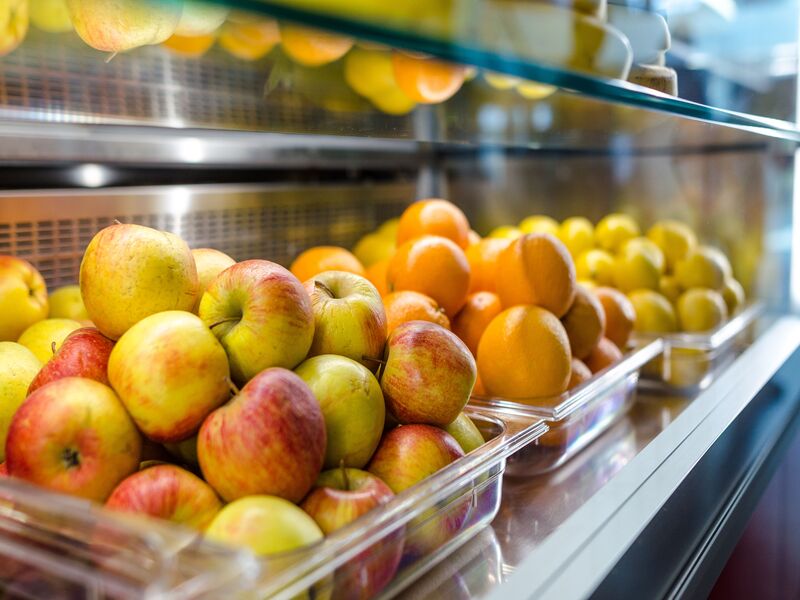
Good refrigeration does more than keep apples cold. It limits moisture loss, slows ripening, and prevents one damaged apple from affecting the rest of the batch. Follow this simple process:
- Leave apples unwashed during storage. Excess surface moisture can encourage premature deterioration. Wash them under running water immediately before eating or cutting.
- Inspect the batch carefully. Remove apples with broken skin, deep bruises, soft spots, or visible decay. Use mildly bruised fruit first rather than storing it with firmer apples.
- Place them in the crisper drawer. Keep apples in a perforated produce bag to maintain humidity while allowing limited airflow.
- Maintain a cold refrigerator. Aim for approximately 32–40°F (0–4°C). The FDA recommends keeping refrigerators at 40°F or below to support proper food storage.
- Check the apples regularly. Remove any fruit that begins leaking, molding, or developing extensive rot.
Proper placement also affects how long do apples last in the fridge. Apples release ethylene gas, a natural compound that accelerates ripening.
Keep them away from ethylene-sensitive produce such as leafy greens, broccoli, carrots, and cucumbers. USDA produce-storage guidance similarly recommends separating ethylene-producing fruit from sensitive produce where possible.
>>> Read More: How Long Does Pumpkin Pie Last in the Fridge? Storage and Safety Guide
4. How to Tell If Apples Have Gone Bad?
Texture changes do not always mean an apple must be thrown away. The goal is to distinguish ordinary quality loss from clear spoilage.
Changes That May Still Be Acceptable
An apple may still be usable if it has:
- Slight softness without leaking flesh
- Wrinkled skin caused by moisture loss
- A small, shallow bruise
- Browning that develops after cutting
A small bruised section can generally be removed if the remaining flesh is firm, smells normal, and shows no mold. Browning on freshly cut apples is usually oxidation rather than spoilage.
Signs the Apple Should Be Discarded
Throw an apple away if you notice:
- Visible mold
- Large rotten or sunken areas
- A fermented or strongly unpleasant smell
- Very mushy, slimy, or leaking flesh
- Dark discoloration connected with extensive decay
When judging how long do apples last in the fridge, physical condition is more useful than age alone. The FDA advises removing small damaged areas but discarding produce that looks rotten. If mold or widespread rot is present, do not try to salvage the apple.
5. Can You Freeze Apples?
Yes. You can freeze apples to extend their storage life for about 8–12 months while maintaining their best quality. Freezing is a practical option if you have more apples than you can use while they are still fresh.
To freeze apples:
- Wash the apples and peel them if desired.
- Remove the cores and cut them into slices.
- Toss the slices with a small amount of lemon juice to help reduce browning.
- Arrange the slices in a single layer on a tray and freeze until firm.
- Transfer the frozen slices to an airtight freezer bag or container.
After thawing, apples will usually have a softer texture. For this reason, frozen apples work best in pies, applesauce, smoothies, oatmeal, muffins, and other cooked or baked recipes rather than as a crisp snack.
6. FAQs
Can apples last 3 months in the fridge?
Some fresh, firm varieties can remain usable for up to three months under consistently cold, humid conditions. However, ordinary household storage often delivers better quality within 4–6 weeks. Inspect older apples individually before eating them.
Can I eat an apple that has been in the fridge for a month?
Yes, provided it has been stored properly and has no mold, extensive decay, leaking flesh, or unpleasant odor. Slight softness or wrinkling mainly indicates declining quality and does not automatically mean the apple is spoiled.
How long are apples good after being cut?
Cut apples generally keep for 3–5 days in an airtight container in the refrigerator. Refrigerate them promptly and discard slices that become slimy, moldy, unusually wet, or sour-smelling.
Should apples be stored in the crisper drawer?
Yes. The crisper drawer helps maintain the cool, humid environment apples need to retain moisture and firmness. A perforated produce bag provides additional protection without completely trapping condensation.
Conclusion
Understanding how long do apples last in the fridge makes it easier to plan meals and avoid unnecessary food waste. Whole apples generally keep their best quality for 4–6 weeks, although firm varieties may last longer under suitable conditions.
Store them cold, dry, and separated from ethylene-sensitive produce, then check the batch regularly. Use softened apples in cooked recipes, freeze surplus fruit early, and discard any apple showing mold or extensive decay.